Pallet Rack Safety Tips Every Warehouse Should Follow
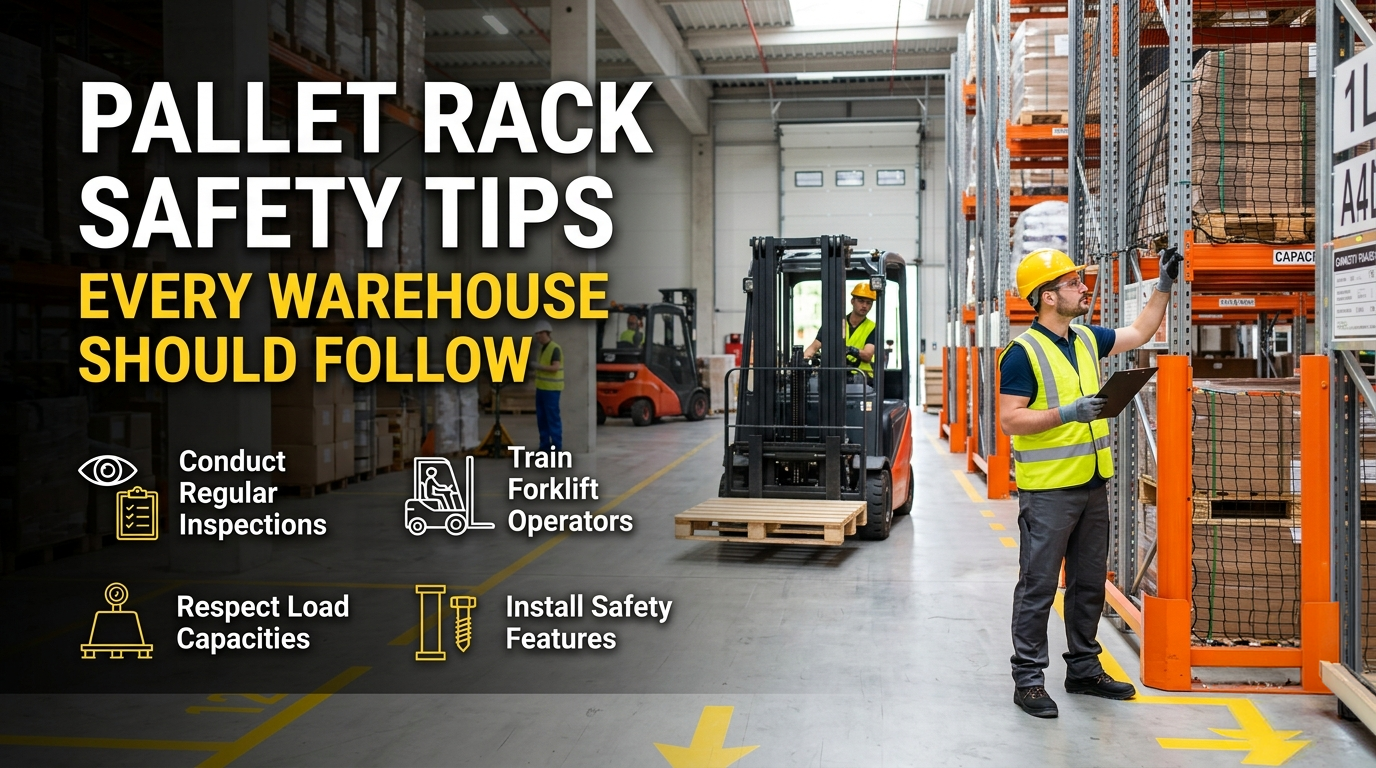
Table of Contents
- 1. Know Your Load Ratings. Actually Know Them.
- 2. Inspect Your Racks. Regularly. Not Just After Something Goes Wrong.
- 3. Take Forklift Damage Seriously. Every Single Time.
- 4. Train Your Team Like Their Life Depends on It. Because It Does.
- 5. Don't Let Rack Repair Become a DIY Project
- 6. Get Your Floor Anchoring Right
- 7. Buy Quality in the First Place
- The Uncomfortable Truth
Let me say something that warehouse managers don't like to hear: most rack collapses aren't accidents. They're the end result of a dozen small decisions that nobody thought were a big deal at the time.
An overloaded shelf here. A forklift nudge is there. A damaged upright that "looks fine." A safety inspection that got pushed to next month. And then next month. And then—
Pallet rack safety isn't glamorous. It doesn't show up on a revenue dashboard. But when it fails, it fails catastrophically—collapsed bays, destroyed inventory, injured workers, regulatory nightmares. I've seen the aftermath. It's not something you want to manage in crisis mode.
So let's talk about what actually keeps a racking system safe. Practically. Specifically. No corporate fluff.
1. Know Your Load Ratings. Actually Know Them.
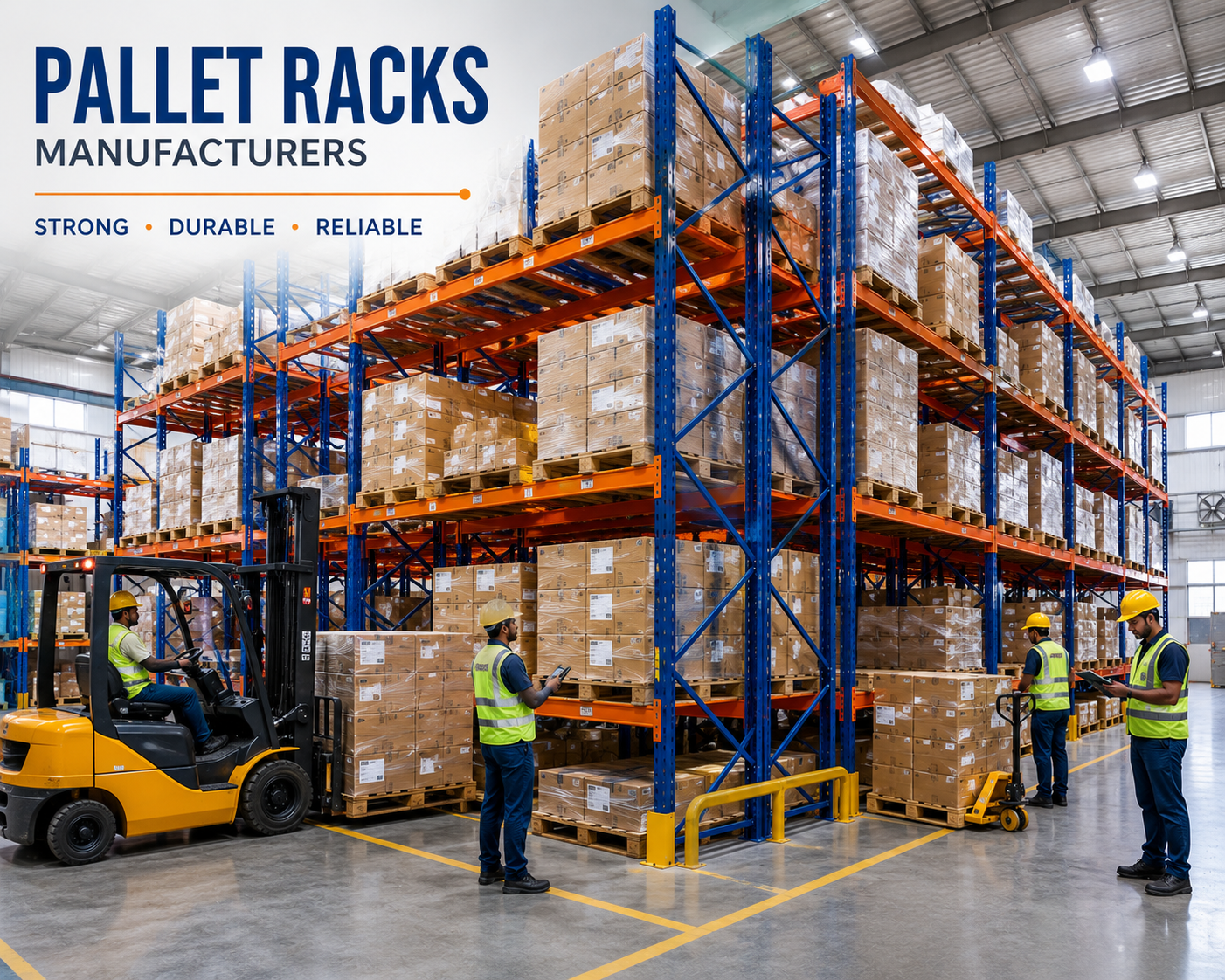
Every pallet rack system has a rated load capacity — per shelf, per bay, per upright frame. These numbers come from the engineers and pallet racks manufacturers who designed and tested the system. They're not suggestions. They're structural limits derived from real material science.
Here's what I mean: a beam rated for 1,000 kg doesn't fail the moment you put 1,001 kg on it. But it deflects. It fatigues. Over weeks and months of repeated overloading, the metal memory changes. And one day, with the same load it's handled dozens of times before, it gives.
So post your load ratings. On the rack, visibly, where every worker can see them. And enforce them. Not selectively. Always.
2. Inspect Your Racks. Regularly. Not Just After Something Goes Wrong.
You know that moment when you finally look closely at a rack upright and realize it's been bent for three months and nobody said anything? That's not an edge case. That happens constantly in busy warehouses.
Build a formal inspection schedule. Weekly visual checks by floor supervisors. Monthly detailed inspections by a designated safety lead. Annual structural assessments — ideally by someone from your storage rack manufacturers' technical team or a qualified rack inspector.
What to look for:
- Bent or buckled uprights (even minor deflection matters)
- Cracked or deformed beam connectors
- Missing or damaged safety clips on beams
- Base plates that have shifted or cracked
- Rust or corrosion that's eating into load-bearing sections
- Anchor bolts that have worked loose from the floor
And here's the bit people always miss: document your inspections. A check you didn't write down didn't happen — at least not in the eyes of any future safety audit.
3. Take Forklift Damage Seriously. Every Single Time.
Forklifts and pallet racks exist in an uneasy truce. Forklifts are heavy, fast, and operated by humans under time pressure. Racks are steel, but not indestructible. The collision rate in an average busy warehouse is higher than most managers want to admit.
Here's the problem: forklift impacts that seem minor often aren't. A hit to an upright that leaves a visible dent has transferred enormous force through the structure. The upright's load capacity is now compromised — by how much, you can't tell just by looking.
The rule has to be that any impact gets reported, assessed, and tagged. Immediately. Not at the end of the shift. Not when someone gets around to it. Immediately.
Install column guards and end-of-aisle protectors. They're not expensive. They're not complicated. But they absorb the low-speed hits that would otherwise chip away at your structural integrity day after day.
And if an upright is damaged? Take that bay out of service. Don't redistribute the load to nearby bays while you wait for a repair quote. Call your Pallet Racks Manufacturers or rack repair specialist and get it fixed.
4. Train Your Team Like Their Life Depends on It. Because It Does.
I'm not being dramatic. Rack collapses kill people.
In India, where warehouse safety culture is still maturing in many sectors, worker training often gets treated as a box-ticking exercise. Watch a 20-minute video, sign a form, done. But that approach doesn't actually change behavior on the floor.
Real training means teaching workers why the rules exist, not just what they are. When someone understands that an overloaded shelf can send 2,000 kg of steel and inventory onto the person working below, they think differently about stacking that extra pallet.
Cover: load limits and where to find them, how to report rack damage, correct forklift operation near racking, and what to do if they notice a structural concern. Make it hands-on. Make it specific to your actual warehouse, your actual racks, your actual equipment.
And refresh it. People forget. New workers join. Habits drift. Retrain every six months minimum.
5. Don't Let Rack Repair Become a DIY Project
Maybe it's just me, but there's something deeply uncomfortable about seeing a bent rack upright reinforced with a length of angle iron and some bolts because "we'll sort it properly later."
Later never comes. And the improvised repair isn't holding the same load the original upright was. It just looks like it is.
When you need rack repairs or replacements, go back to your pallet racks manufacturers or an authorized repair supplier. Use components that are rated and compatible with your existing system. Mixing rack components from different manufacturers — different steel grades, different slot spacings, different tolerances — is how you create a system nobody has actually load-tested.
Storage rack manufacturers who are serious about their products will provide replacement parts, repair kits, and technical guidance. Use those channels. It's worth it.
6. Get Your Floor Anchoring Right
Here's something that gets skipped more than it should: proper anchor bolts.
Pallet racks need to be anchored to the warehouse floor—not because they'll necessarily tip over on their own, but because seismic movement, accidental impact, or uneven loading can all create lateral forces that a free-standing rack simply can't handle safely.
The anchoring spec comes from your rack manufacturer. Follow it exactly. Right bolt diameter, right embedment depth, right spacing. If your floor slab isn't thick enough or is cracked, that's a conversation to have with a structural engineer before you install anything on top of it.
I know this sounds like overkill for a standard warehouse setup. But an unanchored rack that shifts two inches during a forklift impact can destabilize an entire aisle. That's not a theoretical risk. It's a documented failure mode.
7. Buy Quality in the First Place
And this is where I'll be direct: a lot of rack safety problems start at the procurement stage.
When businesses buy the cheapest racking they can find — from suppliers who can't produce material certifications, load test data, or engineering documentation — they're not just saving money. They're accepting unknown risk. Because cheap racking often means thinner steel, inconsistent slot punching, unreliable welds, and coating that fails in six months.
The best pallet racks manufacturers engineer their systems to known standards. They test them. They document them. They stand behind them. And yes, that costs more upfront. But it's the kind of cost that doesn't come back to you as a collapsed bay, a workers' comp claim, or an OSHA notice.
Same principle applies across the board to reputable storage rack manufacturers — the companies producing multiple storage solutions for industrial environments know how to balance strength, cost, and longevity in a way that fly-by-night suppliers simply can't.
When you're evaluating suppliers, ask for: IS or international material grade certifications, load test documentation, installation guidelines, and what warranty they provide. Any serious manufacturer will have answers ready. If they hesitate or deflect? Walk away.
The Uncomfortable Truth
Warehouse rack safety isn't complicated. It's just inconvenient. It requires consistent attention, disciplined reporting, regular spending on inspections and repairs, and a culture where workers feel safe flagging problems without being told they're overreacting.
Most warehouses know what they should be doing. They just don't do it consistently. And for a while, that seems fine. Nothing happens. The racks hold. The shortcuts work.
Build the habits now. Fix the damage you already know about. Train the team properly. Buy from pallet racks manufacturers who actually know what they're doing. Because the cost of getting this right is always lower than the cost of getting it wrong.
-
 Storage Systems for Every Business Need
08-April-2025
-
Pallet Rack Safety Tips Every Warehouse Should Follow
08-April-2025